
About Sword Runner Games games
Three answers, and reading which one is needed
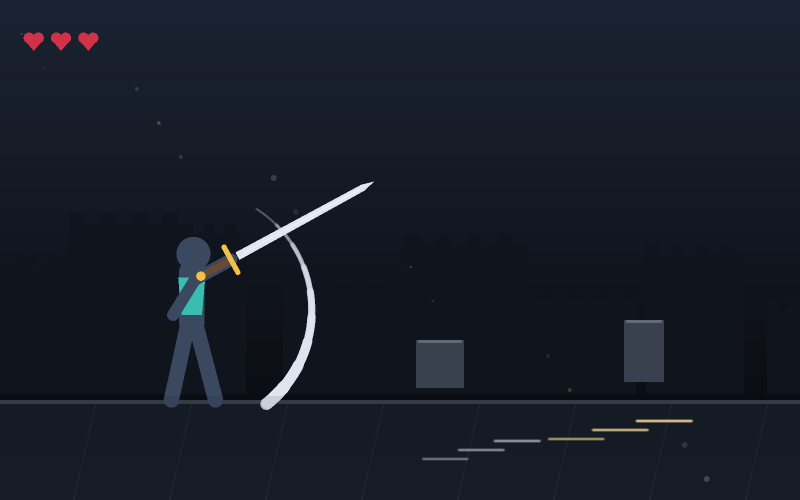
Almost everything in a runner is one of three problems. Something at head height needs a slide. Something at ground level needs a jump. Something that can be destroyed needs a swing. The games are built so that these are visually distinct at a glance - low blocks are solid stone, high beams hang from above, and breakable obstacles are outlined in ember orange.
The skill is not in performing any one of the three. It is in identifying which one is needed while the previous obstacle is still leaving the screen. At full speed you are reading roughly one and a half obstacles ahead, which is why players who stare at their character do worse than players who watch the right edge of the screen.
Cutting a breakable obstacle is always worth more than jumping over it, and several games in this category place breakables where a jump is also possible precisely to make that a decision.
Why the jump feels forgiving, and why that is on purpose
Every runner here gives you a tenth of a second of coyote time - a grace period after leaving a ledge during which a jump still registers - and buffers a jump press made shortly before landing.
Neither of these makes the games easier in any way a player notices. What they do is remove the class of failure where you pressed the right button at approximately the right time and the game said no. Without them a fast runner does not feel hard, it feels broken, and the difference between those two things is most of what separates a good arcade game from a frustrating one.
Speed, and the point at which it stops rising
Speed climbs on a curve that is gentle at the start, steep through the middle, and flattens near the top. It never reaches a value where the obstacles arrive faster than a human can respond to them, because a run should end because you made a mistake, not because the game stopped being possible.
In practice most players plateau somewhere in the steep middle section. The way through it is almost always to look further ahead rather than to react faster.
Where to start
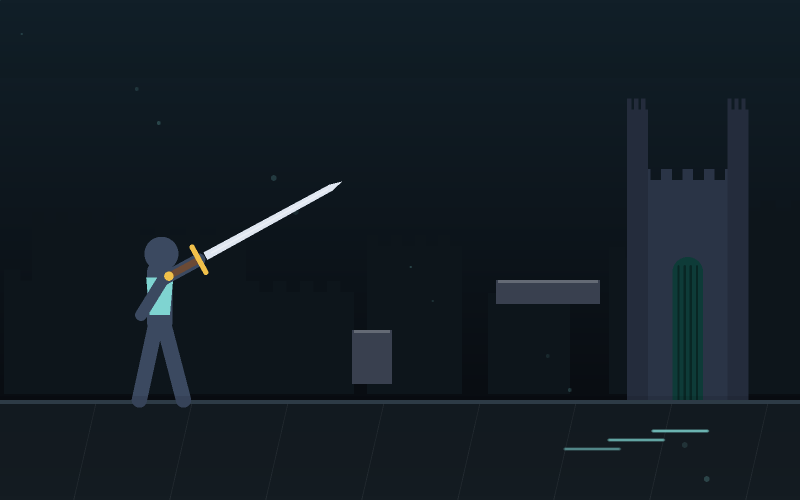
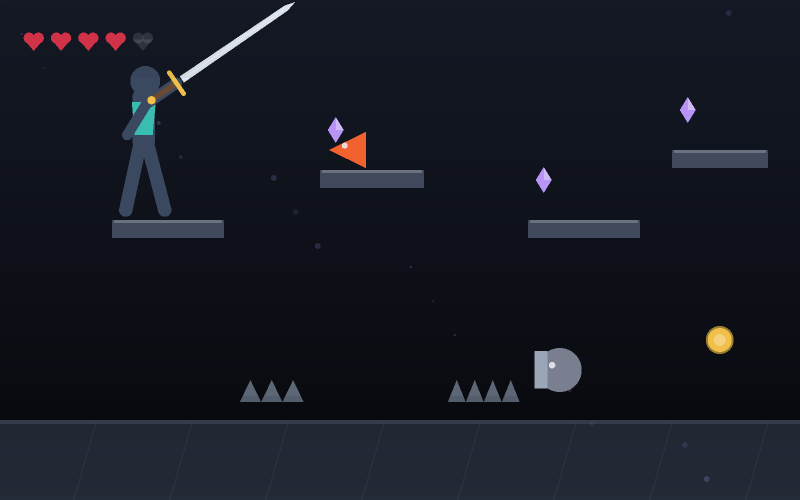
Sword Runner is the baseline: three obstacle types, a slow ramp, and nothing to collect that will get you killed. Samurai Dash adds coins placed in positions that tempt you into bad jumps, which is where the genre gets interesting.
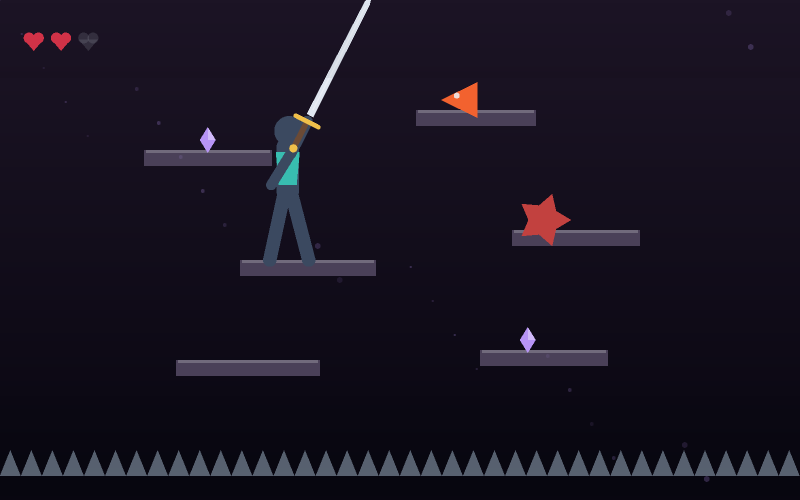
Sword Sprint introduces checkpoints and a stricter course. Pixel Sword Quest is a full platformer rather than an auto-runner, and Blade Tower turns the whole thing vertical - you climb, and the floor you fall to is the one you started on.
Tips for this category
- Watch the right edge of the screen, not your character. You are reading ahead, not reacting.
- Orange outlines mean breakable. Cutting them scores more than avoiding them.
- Do not chase a coin that requires a jump you were not already going to make.
- Slide under high beams rather than trying to jump them - jumping into a beam is the most common run-ender.
- After a checkpoint, take one deliberately cautious obstacle before pushing again.
- If you keep dying at the same speed, you have hit a reading limit rather than a reflex one. Look further ahead.