About Samurai Dash
Pale coins are bait
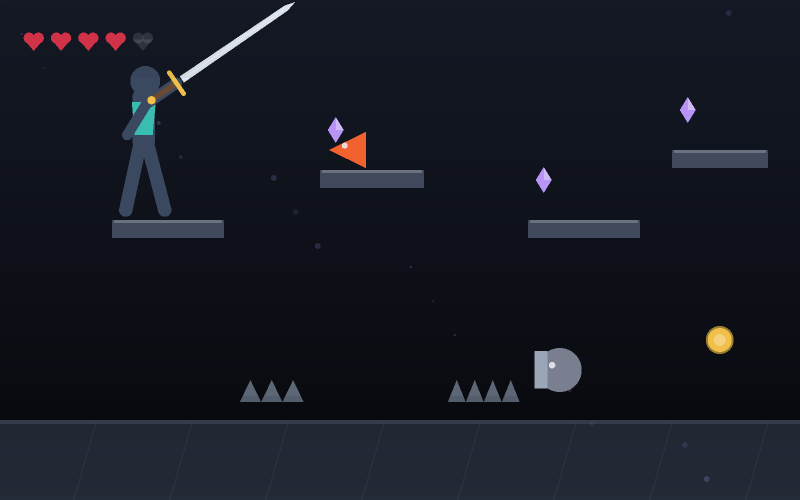
Coins come in two shades. A normal gold coin is safely reachable on the route you should already be taking. A pale coin is placed somewhere that requires a worse decision to reach - most often on top of a beam you are meant to slide under.
The pale colour is a genuine tell rather than a punishment: the game is telling you, before you commit, that this particular coin costs more than it is worth. A pale coin is worth 40 points. A heart is worth the rest of the run.
Refusing bait is not scored directly, because the reward for good judgement is simply still being alive. The end-of-run summary counts how many you left behind, which is the closest thing to a measure of discipline the game offers.
The three coin patterns
Beams get three pale coins along the top and one safe coin low down past them. The lesson is that the safe alternative always exists.
Blocks get a clean five-coin arc that follows exactly the path a correctly timed jump already takes. These are free, and taking them confirms the jump was right.
Barricades get a four-coin run leading into them. Those are fine to take as long as you actually cut the barricade at the end - which is the one pattern where the temptation and the correct play point the same way.
The wandering swordsman
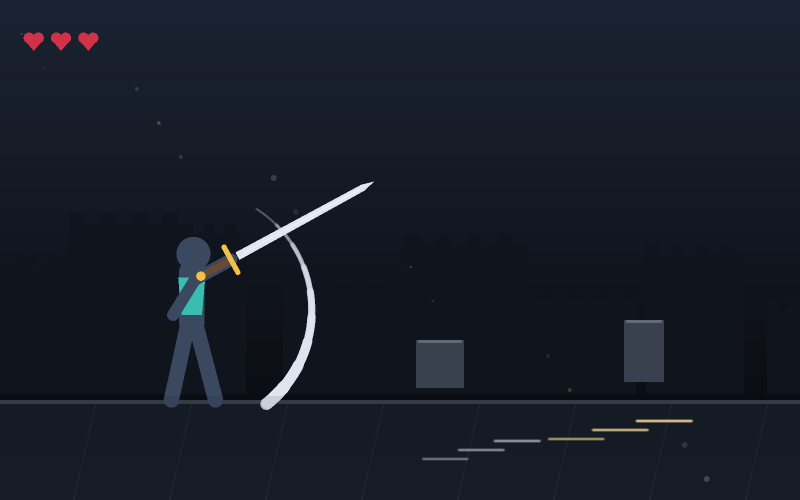
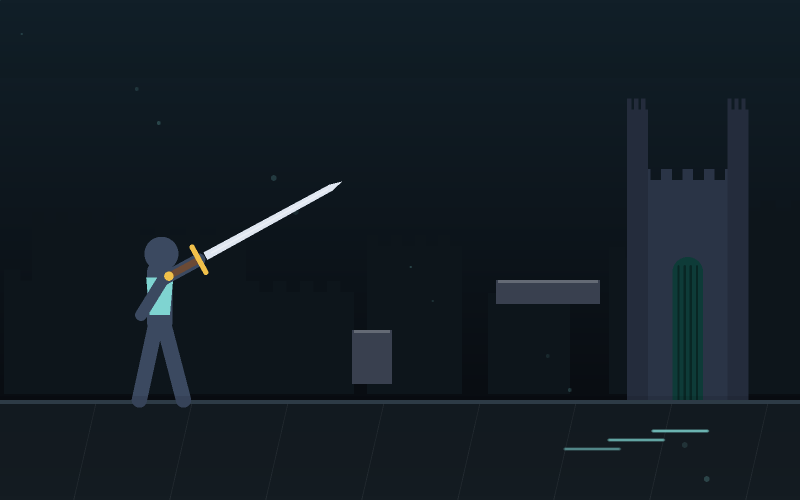
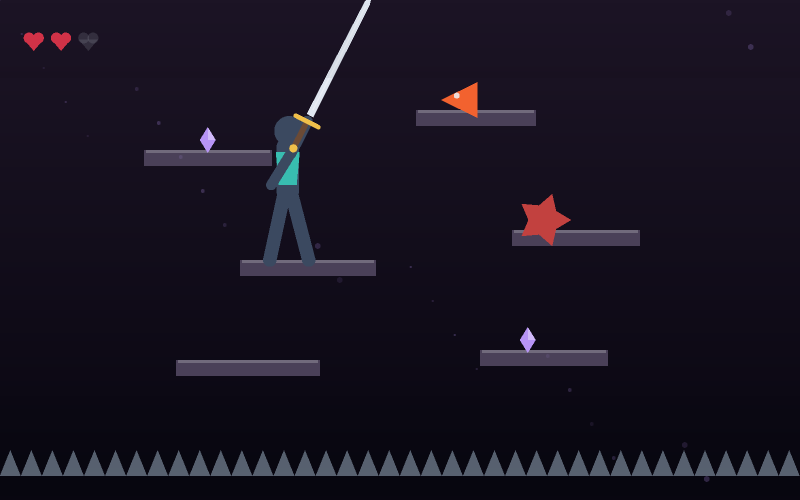
The character running through this course is an original design created for this site: a wandering swordsman in dark red, on a road at sunset. Nothing about the character, the weapon or the setting references any existing game, film or franchise.
That is a constraint applied across the whole project rather than a detail of this game, and it is the reason every silhouette on the site is built from primitives rather than borrowed from anywhere.
How to play
- Press Start. Up jumps, Down slides, Space cuts - the same three answers as Sword Runner.
- Collect coins by running or jumping through them; they do not need to be cut.
- Gold coins are on the route you should already be taking. Pale coins are not.
- A coin is worth 40 to 60 points. A heart is worth the rest of the run.
- Three hearts. The run ends when they do.
Controls
| Where | What to do |
|---|---|
| Jump | Up arrow or W |
| Slide | Down arrow or S |
| Cut | Space, J or K |
| Mouse / touch | Tap the top third to jump, bottom third to slide, middle to cut |
| Touch buttons | Jump, Slide and Slash under the canvas |
| Pause | Escape or P |
Scoring
These are the point values this game awards, before the combo multiplier is applied where it uses one. Hit quality changes the figure: a strike at the centre of the correct moment is worth substantially more than one at the edge of it.
Tips
- Pale coins on top of a beam are the single most expensive mistake in the game.
- Never change a jump you had already planned in order to reach a coin.
- Coin arcs over blocks are free - they follow the jump you were making anyway.
- The coin run into a barricade is fine as long as you finish it with a cut.
- Cuts are worth three to five times a coin. Prioritise them without hesitation.
- The end screen counts the bait you refused. It is the honest measure of a good run.
Common mistakes
- Jumping for pale coins above a beam, which puts you exactly where the beam is.
- Chasing a coin line that leads into a barricade and then forgetting to cut it.
- Treating every coin as worth taking. Most of them are worth less than the risk.
- Sliding late because you were watching a coin rather than the beam behind it.
Features
- Three hand-designed coin patterns, each making a different argument for a bad decision
- A pale colour tell that warns you before you commit, not after
- Bait refused counted and reported in the run summary
- The full three-answer obstacle vocabulary from Sword Runner
- An original wandering-swordsman character and sunset road setting
- One-thumb touch controls with screen-third tap zones