
About Sword Dueling Games games
The three-phase attack, and why everything depends on it
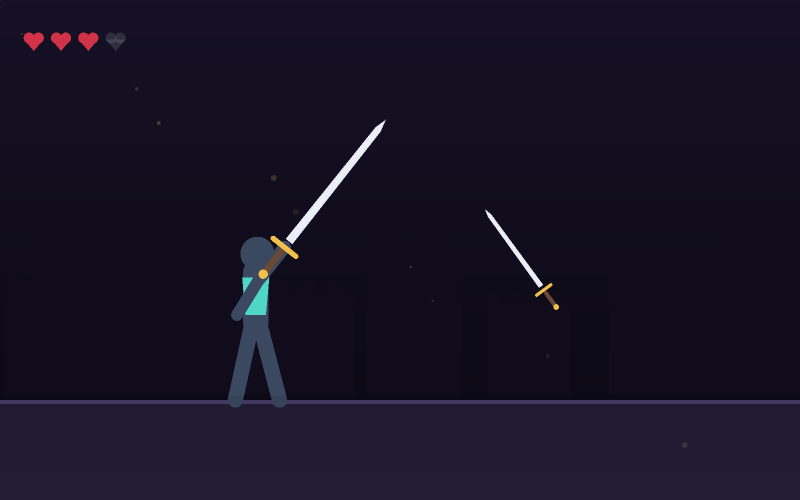
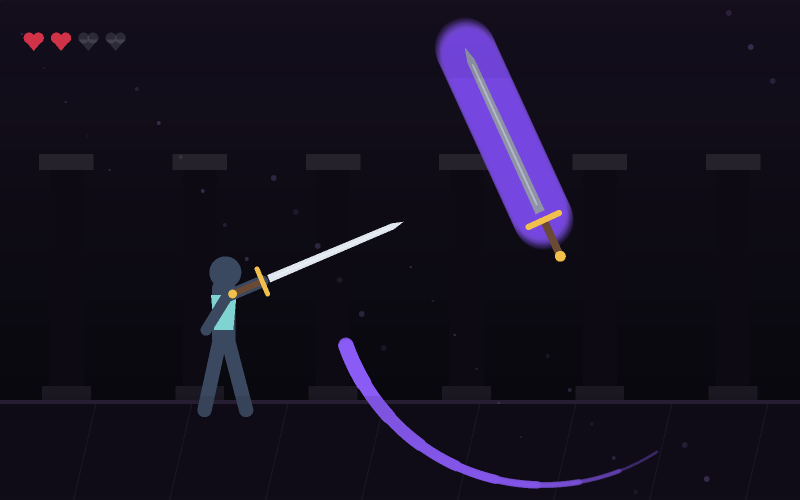
Every attack in every duelling game on this site has three phases. There is a wind-up, when the blade is drawing back and nothing can be hurt. There is an active window, usually around a tenth of a second, when the blade actually connects. And there is a recovery, when the swing is finished and the fighter who threw it cannot do anything else.
That last phase is the whole game. An opponent who has just missed a heavy attack is, for roughly half a second, unable to block, dodge or strike back. Learning to recognise the moment a swing has failed - and to be already moving in when it does - is the difference between a player who trades hits and a player who wins duels without taking any.
It also explains why attacking on reflex loses. If you swing the instant you see movement, you are committing during your opponent's wind-up, which means your recovery lines up exactly with their active window.
Blocking, parrying and the cost of holding a guard
A raised guard stops an attack that comes from in front of you. It does nothing about an attack from behind, and in the games that give opponents an unblockable move it does nothing about those either - which is why the unblockable ones are drawn with a red outline rather than a gold one.
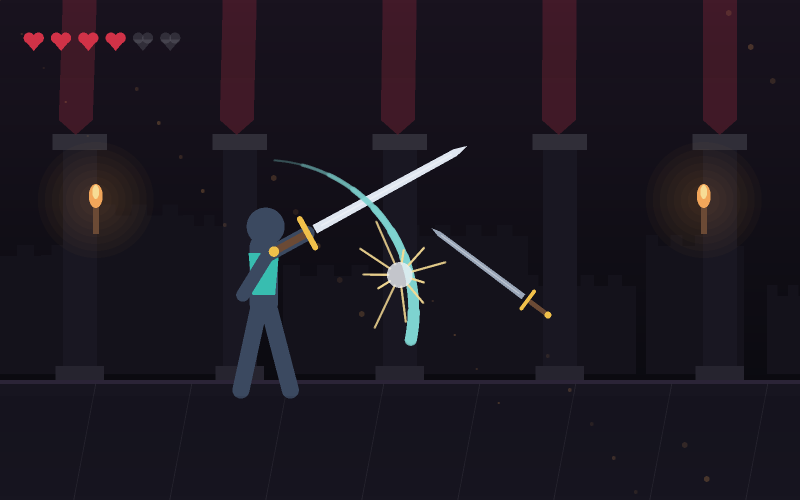
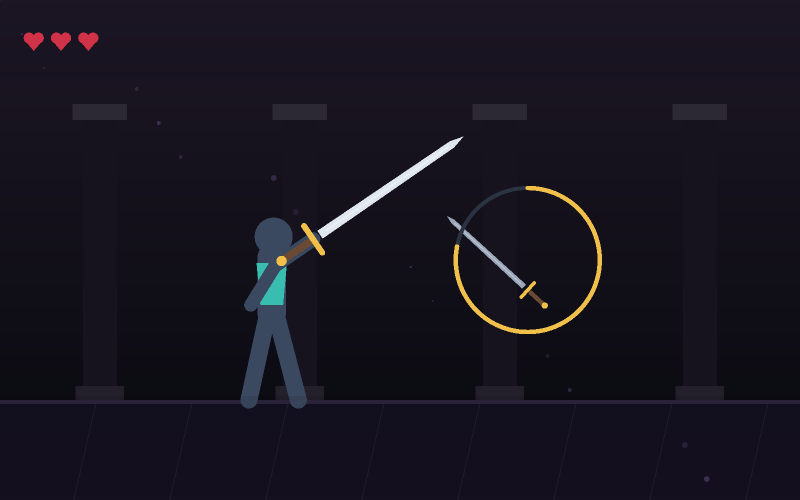
A parry is a block that went up inside a short window, usually around 180 milliseconds, rather than one that was already raised. Parrying costs no stamina, staggers the attacker, and hands you a free hit. Holding a guard permanently costs you stamina every time it absorbs something, and when stamina runs out the guard breaks and you are open for most of a second.
The practical consequence is that turtling does not work here. Guarding is a tool for the moment an attack is arriving, not a state you live in.
Stamina as a resource you spend on purpose
Light attacks cost one point of stamina, heavy attacks cost two, dodges cost one. Stamina refills after a short pause rather than continuously, so a flurry of four swings leaves you with nothing for about a second and a half.
This is deliberately not a cooldown lockout. Nothing stops you emptying the bar; the game simply lets you, and then lets your opponent do what an opponent does to someone who cannot dodge. Managing stamina is a decision, not a restriction.
Where to start
Retro Sword Duel is the gentlest introduction: a slow opponent, generous wind-ups and no unblockable attacks. Sword Duel Arena is the full system with a roster of opponents who behave differently from one another.
Blade Clash raises the speed until reading tells matters more than reacting to them. Blade Master removes the health bar in favour of pure timing windows, and Shadow Sword is a pattern-recognition test that expects you to have learned everything the other four teach.
Tips for this category
- Watch the shoulder, not the blade. The wind-up starts before the sword moves.
- A missed heavy attack is worth more to you than a landed light one - take the punish, do not trade.
- Parry means raising the guard as the attack arrives, not before. Early guards are just blocks.
- Keep one point of stamina in reserve at all times so a dodge is always available.
- Back off deliberately when your stamina is low. Retreating is a move, not a failure.
- Unblockable attacks are outlined in red. Those are the ones to step away from rather than answer.